: , , , , , , , , and
Art & Exhibitions
Werner Braun
Between Water and Sky
Curation: Guy Raz
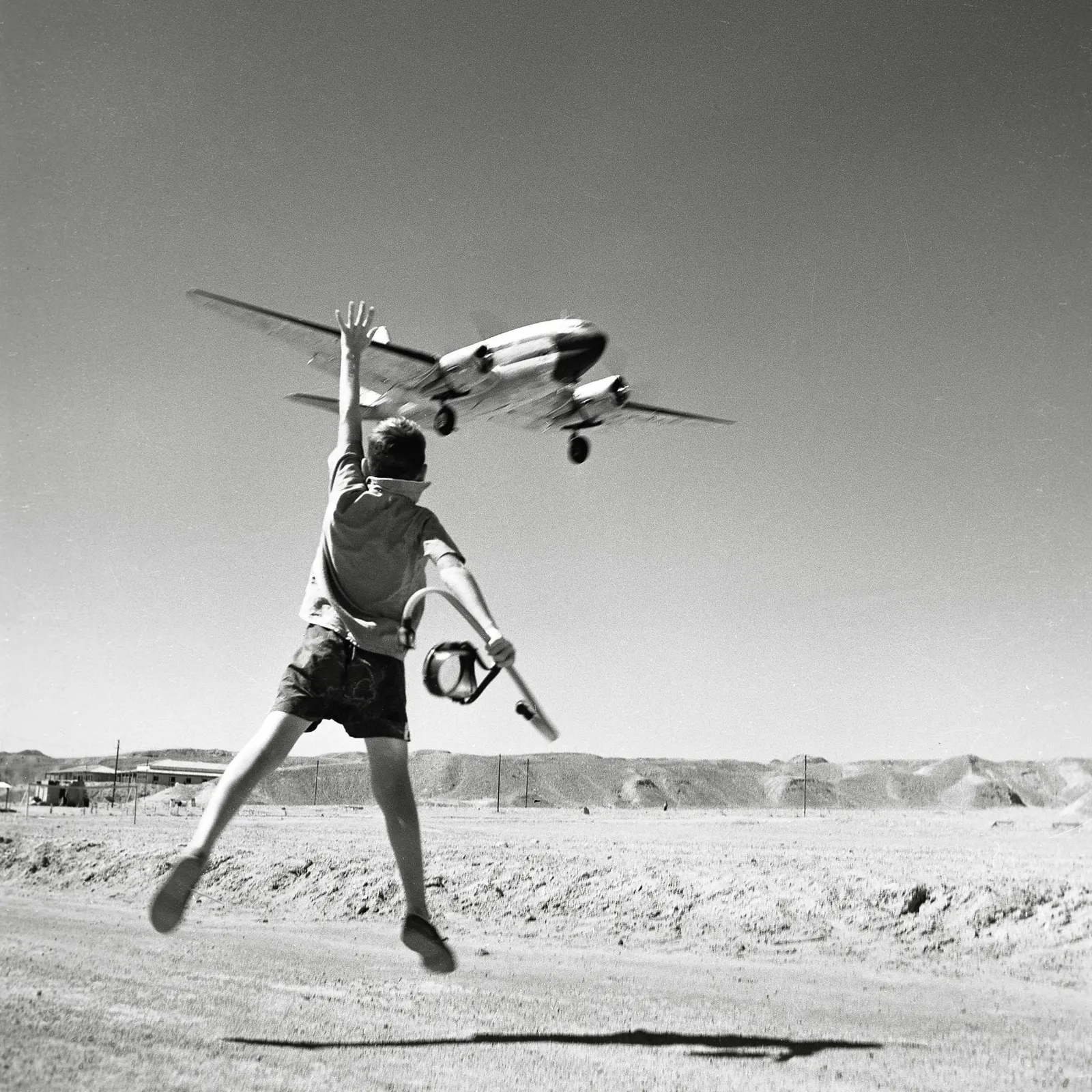
Werner Braun (1918 – 2018) was born in Nuremberg, Germany, and experimented with photography at a young age using the family camera. In 1937, following the rise of the Nazis, he moved to a Zionist agricultural training farm run by Aliyat Hanoar (Youth Aliyah) in Scandinavia. There he acquired professional experience as a photographer, producing a series of staged matchstick scenes titled Stick & Stav (Stick & Staff). The Braun family immigrated to pre-state Israel in 1946, leading to a new chapter in his life. In 1947, he opened the “Photo Braun” studio at 31 Ben Yehuda Street in Jerusalem, where his family also lived. Parallel to his activity in Jerusalem, he embarked on a wide range of photography assignments.
Werner Braun was one of the photographers who arrived in Israel during its formative years, and his photography career was intertwined with the development of Israeli documentary and artistic photography: Braun took photographs for various Zionist organizations, and documented Israel’s wars (from the War of Independence to the First Lebanon War) as well as important trials, including the Eichmann trial (1961) and the Kozo Okamoto trial (1972). He captured the Knesset from its early days in the Frumin building to its establishment at its current location. Braun was Israel’s first underwater photographer, and also took many series of aerial photographs. He was one of the creators of Israel’s first color nature film, which was shot at the Hula Wetland. Braun took photographs throughout the country, and published several books. His photographs appeared on more than 100 newspaper covers in Israel and worldwide, including Davar HaShavua, Haaretz, Bamahane, and The New York Times.
Braun’s photographs alternate between two perspectives: that of a nature lover wandering through the landscape, and that of the urban flâneur. It was the stereoscopic combination of these two perspectives that shaped Braun’s unique angle of vision. The clusters of photographs in the exhibition, which are not arranged chronologically, emphasize the inherently artistic character of his documentary photography. Werner Braun looked squarely at the reality of our lives in the early decades of Israeli statehood – leaving us with an original and fascinating visual document, photographed between water and sky.
The exhibition and catalogue were produced with the generous support of the Werner and Anat Braun Heritage Foundation